
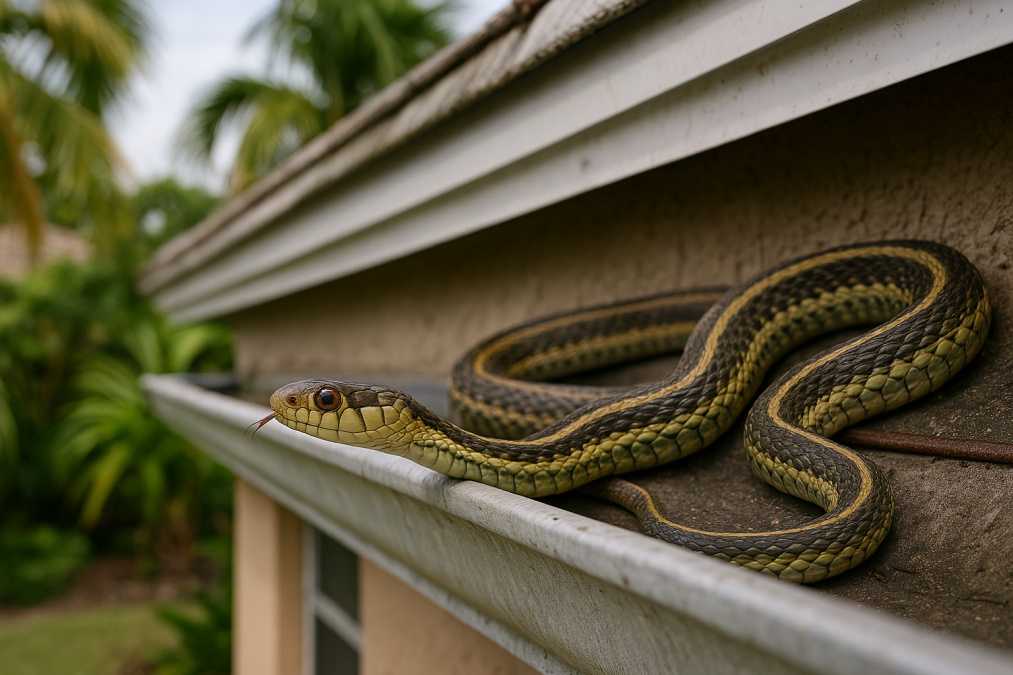
Can Snakes Live in Gutters?
Yes, snakes can thrive in your gutters. Gutters provide warmth, shelter, and a food source, making them attractive habitats for snakes. After years in the gutter business, I have encountered more than my fair share of snakes that took up residence in clogged or old gutters.
Common species include rat snakes, garter snakes, and gopher snakes, which exploit the gutter microclimate.
Venomous snakes like copperheads may also be present, posing safety risks during maintenance. Signs such as shed skins and droppings indicate their presence. Learning more can equip you with strategies for prevention and safe removal.
Understanding the Attraction of Gutters for Snakes
While gutters might seem like an unusual habitat for snakes, several factors make them attractive. The warmth and shelter provided by gutters cater to snakes’ shedding requirements, offering an ideal environment for this natural process. Additionally, gutters’ accessibility through dry downspouts and branches facilitates hunting behaviors, allowing snakes to effectively pursue prey.
Gutters often house rodents and birds, essential components of a snake’s diet, hence enhancing their appeal as hunting grounds. Neglected gutters filled with debris and standing water further augment this attraction, supporting a robust ecosystem for prey.
As a result, snakes are drawn to these environments, where they can fulfill both their shedding and predatory needs. Snakes seek warm places, like roofs, to regulate their body temperature. Ensuring regular gutter maintenance is paramount to mitigate these risks effectively.
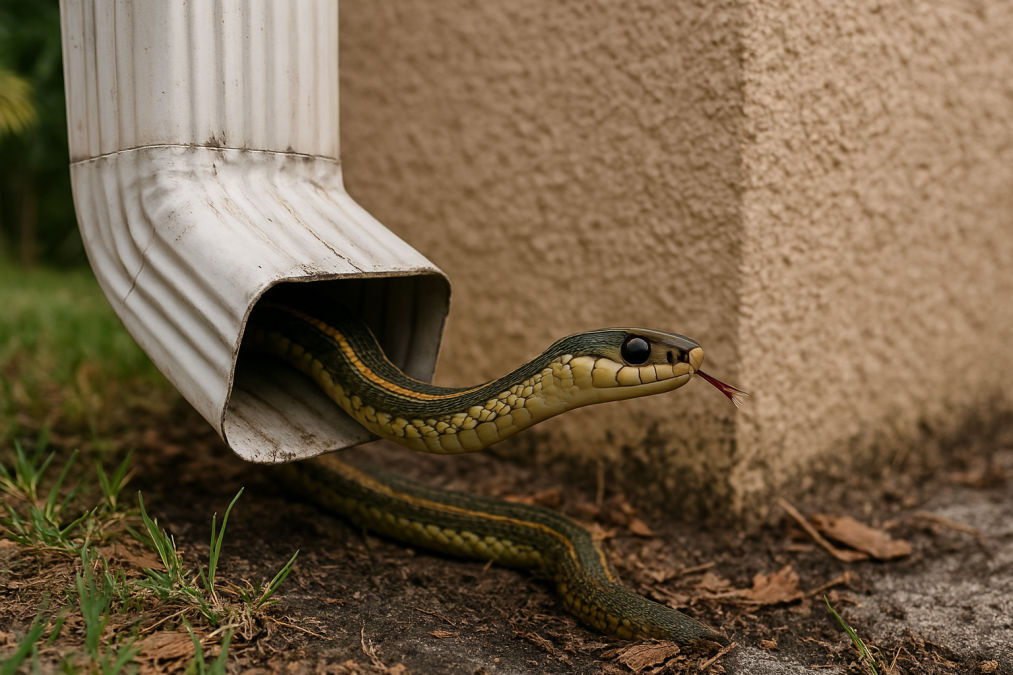
Types of Snakes Commonly Found in Gutters
Recognizing why snakes find gutters appealing naturally leads to examining the specific types of snakes commonly found in these environments. Regional snake population diversity means you’ll encounter different species based on your geographic location.
For instance, rat snakes, garter snakes, and gopher snakes are prevalent in North America. These species thrive due to the gutter microclimate influences, such as warmth and humidity, which provide ideal living conditions. Gutters with accumulated debris and accessible prey like rodents attract these snakes.
The physical characteristics of snakes, including their elongated bodies and keeled scales, enable them to navigate and inhabit narrow spaces easily.
Removing snakes from gutters can be dangerous, so it is advisable to contact professionals to handle the situation safely. Understanding these factors is pivotal for identifying potential snake encounters and implementing safety measures effectively.
Potential Dangers of Snakes in Your Gutters
When examining the potential dangers of snakes in your gutters, it’s essential to ponder the threat posed by venomous species, which can increase the risk of bites during maintenance activities. Snakes feed on rodents, which may be dwelling in the gutter system, creating a food source that attracts them.
These encounters not only jeopardize personal safety but also lead to significant property damage, as snakes and the rodents they attract can clog gutters and infiltrate roof spaces. Proactive measures, such as regular inspections and maintenance, help alleviate these risks and protect your home from costly repairs.
Venomous Snake Threats
Encountering venomous snakes in your gutters poses a significant safety risk. The risks of venomous snake bites extend beyond physical harm, potentially affecting your property’s electrical systems. When cleaning gutters near power lines, the presence of snakes like copperheads or cottonmouths can introduce electrical hazards, increasing the likelihood of accidents.
These serpents may remain concealed within debris, presenting invisible threats that disrupt normal maintenance activities. In regions where coral snakes or timber rattlesnakes are prevalent, the gutters might serve as unexpected habitats, complicating detection and removal. Nearly half a million people are treated for ladder-related accidents yearly, highlighting the importance of safety measures when dealing with such risks.
To mitigate these dangers, engage professional services equipped to handle snake removal safely. Additionally, regular maintenance and safety equipment are essential in preventing these venomous intruders from establishing residence in your gutters.
Risk of Bites
Some might be surprised to learn that gutters can become inadvertent shelters for snakes, increasing the risk of bites. Venomous species, such as rattlesnakes and copperheads, may find these elevated, undisturbed spots ideal. While snakes generally avoid confrontation, they can act defensively if cornered, heightening the chance of bites.
If bitten, immediate first aid for bites includes keeping the affected limb still and slightly elevated. Venomous bites necessitate seeking medical treatment promptly, as antivenom might be required for severe cases. Symptoms to watch for include pain, swelling, and potential systemic effects like nausea or respiratory distress. Most bites occur in spring and summer when snakes are more active, making regular gutter inspections during these seasons even more crucial. Regular gutter inspections and maintenance, along with proper exclusion methods, can drastically reduce the likelihood of encountering snakes in these areas.
Property Damage Concerns
How might snakes in your gutters affect your property? While snakes themselves don’t directly damage gutters, their presence signals potential rodent infestations. Rodents exacerbate gutter overflow risks by clogging gutters, leading to structural damage like fascia rot and water erosion in foundations.
This makes water damage mitigation imperative. Rodents also chew on electrical wires, posing fire hazards and necessitating costly repairs. Furthermore, clogged gutters accumulate water, increasing the weight on brackets, risking detachment and further structural harm. Water retained in gutters adds weight and stress to the structure, which can further exacerbate these risks.
To mitigate these issues, regular gutter cleaning and maintenance are essential. Installing gutter guards prevents rodent entry, reducing the likelihood of snake infestations. By addressing rodent problems, you protect your property from extensive damage and ensure a safe, secure home environment.
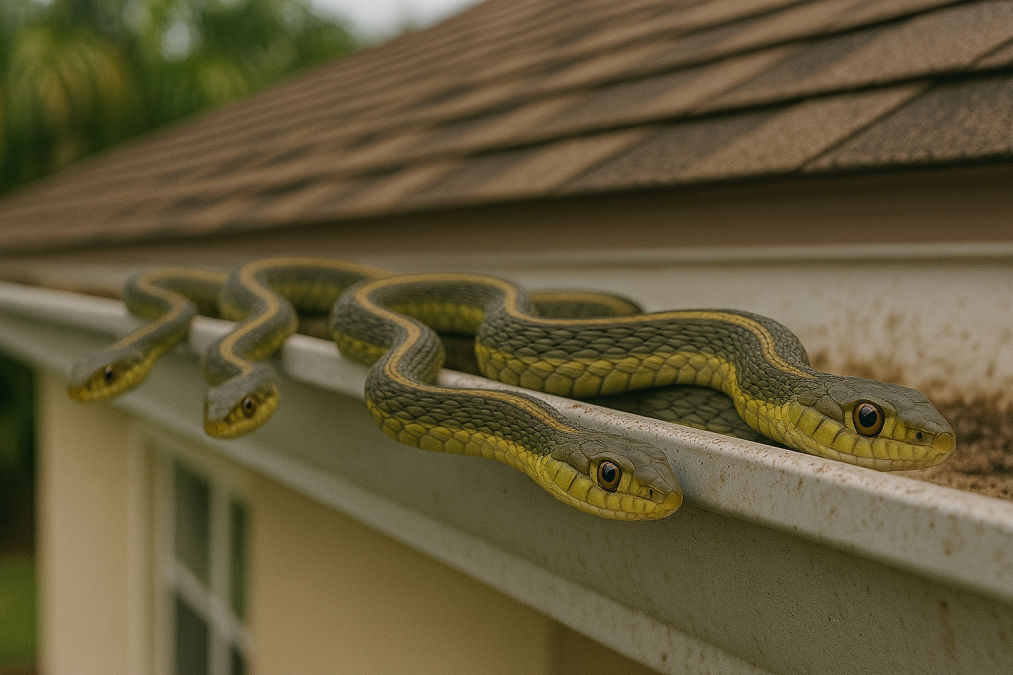
Recognizing Signs of Snake Presence in Gutters
When inspecting your gutters, observe the presence of shed snake skins, which are often left behind as snakes grow. You should also identify snake scat, typically characterized by elongated droppings that may contain remnants of fur or bones from prey. These indicators provide essential evidence of snake activity and can guide you in determining the potential for snakes inhabiting your gutter system.
Identifying Shed Skins
A clear indicator of snake presence in gutters is the discovery of shed skins, which serve as valuable evidence of past snake activity. Snake skin identification involves closely examining the translucent, scaly layer left behind. Through scale pattern analysis, you can determine the species, as the shed skin retains the original scale pattern.
The skin’s length, often longer than the actual snake, provides clues about its size. Look for keels or specific scale patterns to pinpoint species. The presence of a tapering tail can help rule out certain snakes. Regularly inspect gutters for these signs. Your vigilance in identifying shed skins can inform necessary preventive measures, ensuring your home remains a safe, snake-free environment.
Detecting Snake Scat
Curious about the signs of snake presence in gutters? Detecting snake scat is a key indicator. You’ll notice snake droppings resemble bird droppings but have a log-like form with a chalky tip. Typically brown with a white tip, their size varies, helping in identifying snake species. Inspecting gutter access points closely can reveal scat concentrated in specific areas, due to snakes’ habitual behavior.
The presence of feces, often paired with uric acid, signals snake activity. A distinct musky odor might also accompany these findings. Regularly inspect your gutter system for these signs, as early detection is vital for safety. If you detect snake scat, consider professional intervention to manage any potential infestations and secure your gutters.
Strategies to Prevent Snakes From Settling in Gutters
Many effective strategies exist to prevent snakes from settling in your gutters, leveraging scientific insights into their behavior and habitat preferences. Utilizing snake management techniques, you can focus on biodegradable gutter cleaning to decrease the likelihood of snakes finding your gutters hospitable. Snakes, being ectothermic, may seek warmth in debris-filled gutters, so regular maintenance is essential.
Install gutter mesh, such as Triple-G, to block access, and inspect for entry points regularly. Eliminating attractants like standing water and clutter around your home also plays a critical role. Trim vegetation and use snake-deterrent plants like marigolds and lemongrass to create a less inviting environment. Ensuring your yard is tidy reduces potential snake habitats, enhancing safety and peace of mind.
Safe Practices for Addressing Snake Infestations in Gutters
Understanding how to prevent snakes from settling in your gutters is just one part of effective snake management. Proper safety protocols are essential when addressing snake infestations. Begin by regularly inspecting gutters for signs like droppings or shed skin.
When doing so, guarantee you utilize ladders safely and wear protective gear such as gloves and a mask. If snakes are present, effective removal techniques include calling professional wildlife removal services or using snake traps. Check traps frequently to minimize snake distress, and handle captured snakes gently, releasing them away from residential areas.
To prevent re-entry, install snake-proof mesh on downspouts. Always remain calm during sightings, and document encounters for future prevention. Your safety is paramount, so don’t hesitate to seek expert help.